
Recovery & Repair Studies
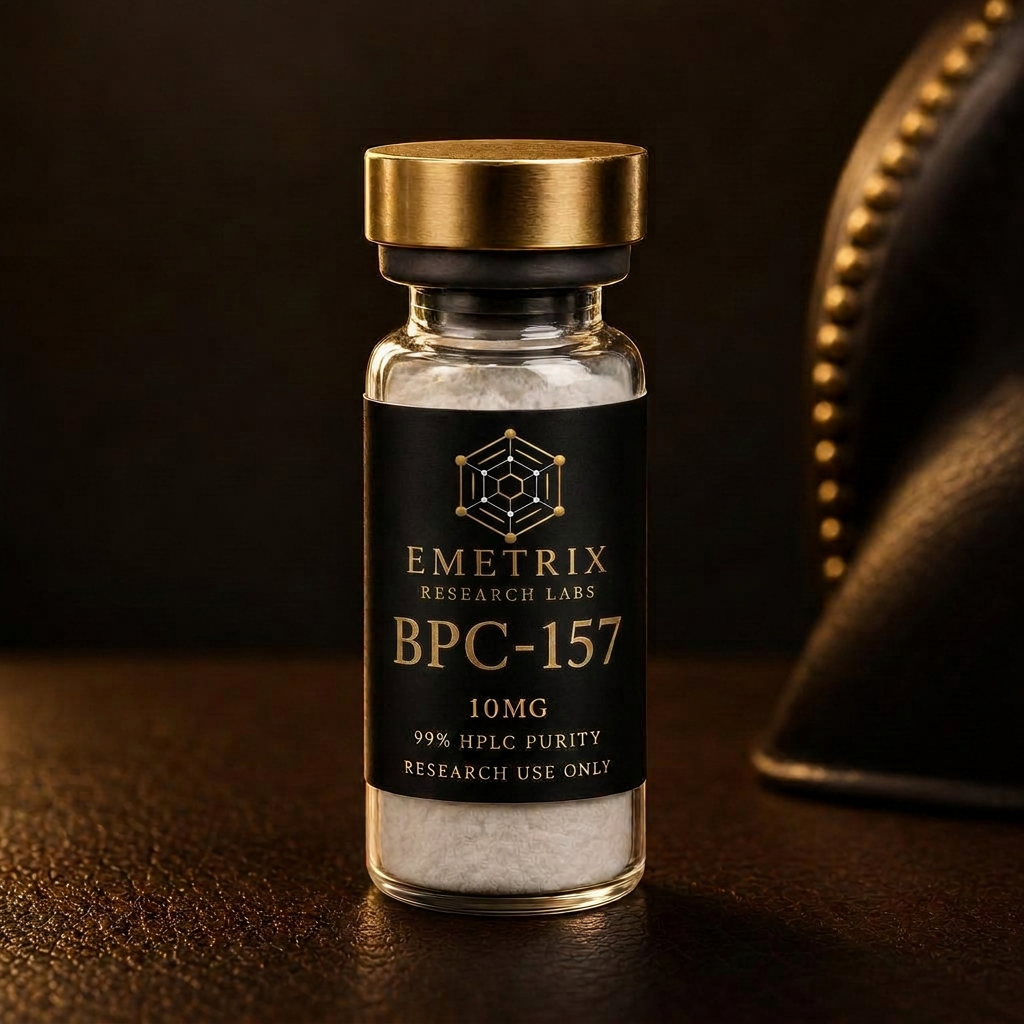
BPC-157
Body Protection Compound — tissue repair research.
Specifications
- Formula
- C62H98N16O22
- Molecular Weight
- 1419.56 g/mol
- Storage
- Store at 2-8°C / 36-46°F
- Form
- Lyophilized Powder
Description
A synthetic pentadecapeptide studied for its effects on tissue repair and gastrointestinal research models. For laboratory use only.
Certificates of Analysis
Compound Guide
What is BPC-157?
Systemic Repair & Gut Integrity
BPC-157 is a synthetic 15-amino-acid sequence derived from a protective protein found in gastric juice. Research models study it for its apparent influence on angiogenesis (new blood-vessel formation) and fibroblast migration — the two processes underlying connective-tissue repair. It is among the most widely referenced peptides in soft-tissue and gastrointestinal literature.
Areas of Research Interest
Summarized from published research findings. Not medical guidance or prescribing information.
Tendon & Ligament Models
Studied for accelerated fibroblast recruitment at injury sites in tendon, ligament, and muscle repair models.
Gastrointestinal Lining
Originally isolated from gastric juice; investigated for mucosal protection and intestinal barrier integrity.
Angiogenesis
Research points to upregulation of VEGF signaling, improving perfusion to poorly vascularized tissue.
Systemic Reach
Unlike locally acting agents, literature describes systemic effects regardless of administration site.
Joint Comfort Models
Examined alongside TB-500 for range-of-motion and structural recovery endpoints.
Tolerability Profile
Consistently reported as one of the better-tolerated peptides across published research protocols.
Reconstitution
- 5 mg vial + 2 mL bacteriostatic water = 2.5 mg/mL
- 10 mg vial + 4 mL bacteriostatic water = 2.5 mg/mL
- At 2.5 mg/mL, 1 unit on a U-100 insulin syringe = 0.025 mg (25 mcg)
Suggested research protocol
- Route studied: subcutaneous, commonly near the region of interest.
- Timing: split morning/evening dosing is the most common design in the literature.
- Cycle: 4–8 week research blocks, then a comparable washout period.
- Use within 30 days of reconstitution; refrigerate at 2–8 °C.
Dosing Reference
| Phase | Daily amount | U-100 units @ 2.5 mg/mL |
|---|---|---|
| Week 1–2 | 250 mcg | 10 units |
| Week 3–4 | 500 mcg | 20 units |
| Week 5–8 | 500–750 mcg | 20–30 units |
| Maintenance | 250 mcg | 10 units |
Handling & Notes
- Lyophilized vials are shelf-stable; reconstituted vials must stay refrigerated.
- Do not shake — direct the diluent down the vial wall and swirl gently.
- Discard if the solution is cloudy or contains particulate.
Stack Up
Compounds studied alongside BPC-157
This guide is provided for informational and research reference only. BPC-157 is intended for laboratory research use exclusively and is not intended to diagnose, treat, cure, or prevent any disease. Not for human or veterinary consumption.