regenerative · August 3, 2026
BPC-157: Current Research Landscape in Tissue Repair Signaling
A laboratory overview of BPC-157, covering angiogenic signaling, reported findings in tendon and gastrointestinal models, and open methodological questions.

Background and Structural Context
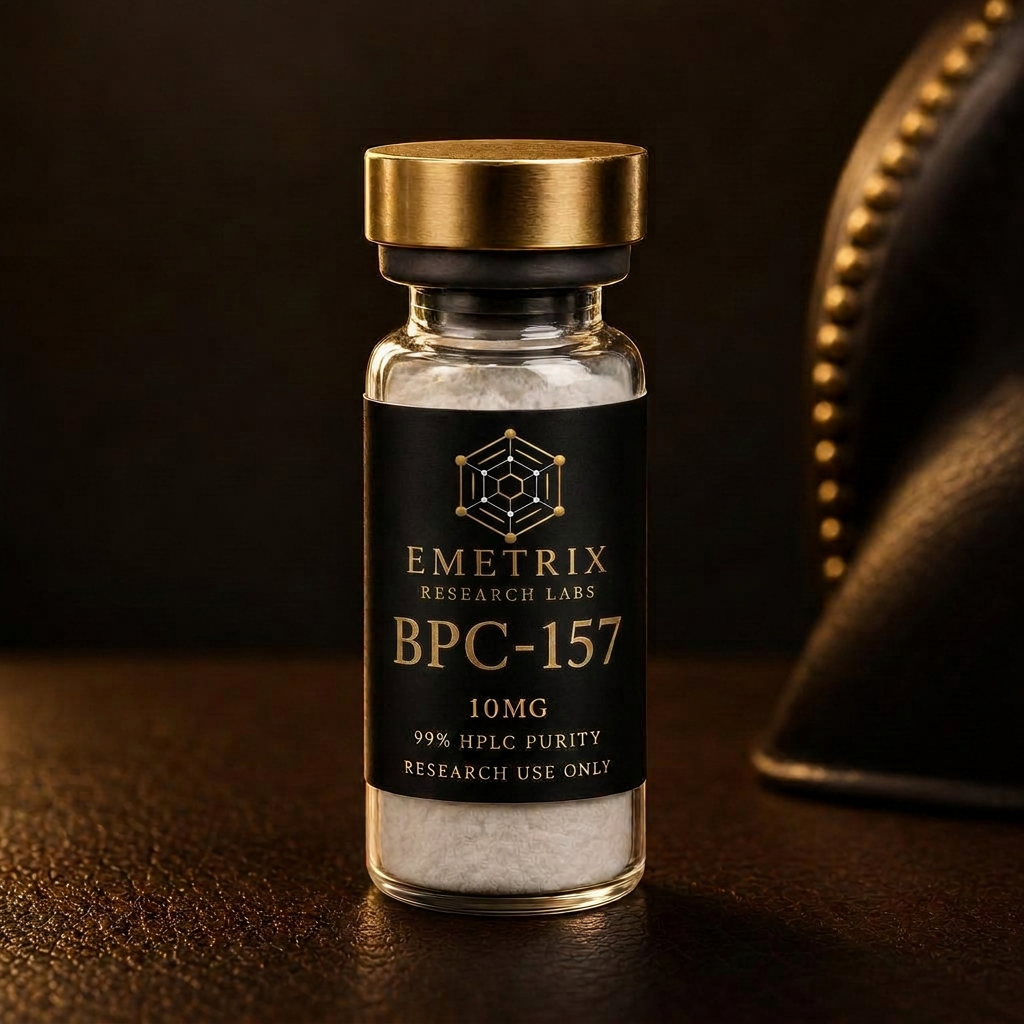
BPC-157 (Body Protection Compound 157) is a synthetic pentadecapeptide composed of fifteen amino acids, defined by the sequence Gly-Glu-Pro-Pro-Pro-Gly-Lys-Pro-Ala-Asp-Asp-Ala-Gly-Leu-Val. Derived from a partial sequence identified within human gastric juice protein BPC, this compound has garnered scientific interest within regenerative medicine and cellular biology due to its distinct structural stability and broad cytoprotective properties observed in preclinical setups.
Unlike many naturally occurring peptide fragments that undergo rapid enzymatic degradation in biological fluids, BPC-157 exhibits resistance to gastric juice digestion and structural integrity across a broad range of pH levels and temperatures. This intrinsic stability makes it a useful candidate for investigating tissue repair kinetics, microvascular remodeling, and signaling cascades across diverse cell lineages without the immediate requirement of chemical modifications or complex delivery vectors.
Mechanisms of Action in Tissue Repair Signaling
The cytoprotective and regenerative responses associated with BPC-157 are mediated through a network of overlapping intracellular pathways rather than interaction with a single receptor target.
Angiogenic Pathway Activation
A central focus of BPC-157 research is its capacity to modulate angiogenesis. Preclinical models demonstrate that the peptide upregulates the expression of vascular endothelial growth factor (VEGF) and its key functional receptor, VEGFR2. This activation promotes early endothelial cell proliferation, tubulogenesis, and collateral blood vessel formation in ischemic or traumatized tissues. Additionally, BPC-157 interacts with the nitric oxide (NO) signaling system, modulating endothelial nitric oxide synthase (eNOS) activity. This dual modulation supports structural neovascularization and fine-tunes vascular tone to sustain localized microcirculation.
Cell Migration and Cytoskeletal Remodeling
Investigative assays highlight BPC-157's involvement in the Focal Adhesion Kinase (FAK)–Paxillin pathway. Phosphorylation of FAK and paxillin is critical for cell adhesion, focal contact dynamics, and directional cell movement. In fibroblast and tendon cell culture assays, administration of BPC-157 correlates with accelerated cell migration into denuded wound gaps. This effect appears driven by downstream intracellular signaling that reconfigures the actin cytoskeleton, aiding cell spreading and extracellular matrix (ECM) repopulation.
Transcriptional Regulation and Inflammatory Modulation
BPC-157 exerts influence over early gene expression pathways involved in structural remodeling. It has been observed to upregulate Early Growth Response protein 1 (EGR-1) and its co-repressor Nab2, genes responsible for initiating collagen synthesis and controlling matrix turnover. Furthermore, in acute inflammation models, BPC-157 administration attenuates the expression of pro-inflammatory cytokines—including tumor necrosis factor-alpha (TNF-α), interleukin-6 (IL-6), and nuclear factor kappa B (NF-κB)—while maintaining balanced anti-inflammatory signaling, thereby creating a biochemical environment permissive to structural repair.
Observed Effects Across Preclinical Models
Empirical evaluation of BPC-157 spans multiple tissue systems, demonstrating regulatory effects across diverse physiological stress conditions.
Musculoskeletal and Tendinopathy Models
In rodent models of transected, crushed, or chemically damaged tendons (such as the Achilles tendon), exposure to BPC-157 correlates with an increased rate of functional recovery and tissue continuity. Histological analyses reveal higher density and orientation of collagen fibers, along with increased local fibroblast recruitment. Similar restorative trends have been reported in ligament transection, skeletal muscle laceration, and bone-to-tendon healing models, suggesting a systemic mechanism of musculoskeletal matrix organization.
Gastrointestinal Mucosal Protection
Given its origin from gastric proteins, BPC-157 has been extensively studied in gastrointestinal damage models. Research demonstrates that the peptide mitigates mucosal lesions induced by non-steroidal anti-inflammatory drugs (NSAIDs), ethanol administration, or ischemia-reperfusion injury. The protective mechanism involves maintaining mucosal tight junction integrity (e.g., claudin and occludin preservation), reducing epithelial cell apoptosis, and preserving organ blood flow under corrosive or oxidative challenge.
Ischemic and Organ Injury Models
In models of focal cerebral ischemia, myocardial infarction, and hepatic ischemia-reperfusion injury, BPC-157 exposure has been associated with reduced necrotic tissue volume and diminished markers of systemic oxidative stress. The peptide's pro-angiogenic capacity appears to accelerate the establishment of functional collateral vessel networks, restoring perfusion to hypoxic regions and preserving metabolic activity in threatened parenchymal tissue.
Methodological Considerations and Research Limitations
While published literature presents consistent findings regarding BPC-157's bioactivity, several methodological limitations must be considered when evaluating the research landscape:
- Model Heterogeneity: The vast majority of current data is derived from small animal models (rodents) and in vitro cell cultures. Large mammalian translational studies remain limited.
- Target Characterization: A specific high-affinity cell surface receptor for BPC-157 has not been definitively identified. Current understanding relies on downstream signaling cascades rather than classical receptor-ligand kinetics.
- Pharmacokinetics: Comprehensive pharmacokinetics, including precise biological half-life, systemic distribution clearance pathways, and metabolic metabolites across different delivery routes (e.g., intraperitoneal, subcutaneous, oral), require further formal mapping.
- Neovascular Risks: Because chronic upregulation of angiogenic drivers (such as VEGF) intersects with pathways involved in tumor growth and diabetic retinopathy, long-term safety profiles, tumorigenicity assays, and dose-response limits must be rigorously defined in future investigations.
Regulatory and Research Status
BPC-157 is classified strictly as a compound for laboratory research and development. It is not approved by the U.S. Food and Drug Administration (FDA), the European Medicines Agency (EMA), or other global regulatory bodies for therapeutic use, human consumption, or clinical administration. Use of BPC-157 is limited to validated in vitro assays, biochemical characterization, and authorized animal research protocols under controlled laboratory conditions.
Related products